
About Fungi
Photo by Mason Rowe
Mason Rowe Talks Fungi…
In his role as our 2023 Summer Garden Intern, Mason was very busy. The garden redesign was in full swing when he arrived; he jumped right in to tasks involved in the garden, but was also able to share his passion for foraging for mushrooms in two pop-up fungi walks. Mason shares his expertise on fungi here, and for that we are grateful! Enjoy!
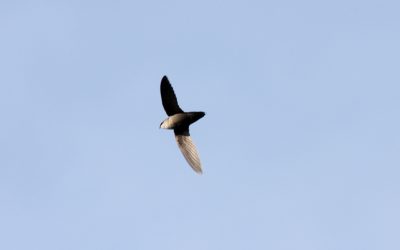
Chimney Swift
The Chimney Swift (Chaetura pelagica), is truly a bird of the air, spending its days speeding aloft on thin, sickle-shaped wings, catching flying insects for food. This species, though declining in numbers, is still a fairly common sight in our area in summer. The...
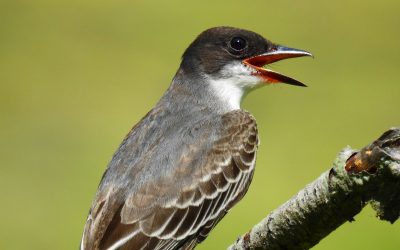
Eastern Kingbird
Although not brightly colored, the Eastern Kingbird (Tyrannus tyrannus) is a conspicuous and flamboyant bird. This large flycatcher, about the size of a Catbird, is found commonly in our area in summer in fields, wetlands, and even urban parks. Except for a thin,...
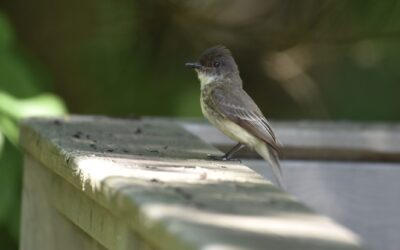
Eastern Phoebe & Wood-Pewee
The Eastern Phoebe (Sayornis phoebe), is a familiar species to most in our area, often found building its nest of mud and moss under the eaves of houses and other buildings, especially near water. This bird, though not at all brightly colored, is a conspicuous one,...
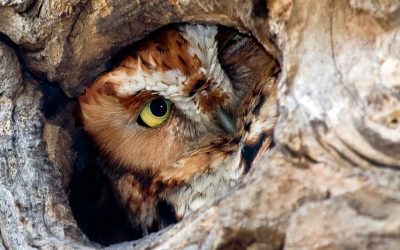
Eastern Screech-Owl
The Eastern Screech-Owl (Megascops asio) is one of our more common birds. This fact may come as a surprise, since, like most owls, this species is seldom seen without a special effort made to find it. Its nocturnal habits and reticent nature conceal it from a mostly...
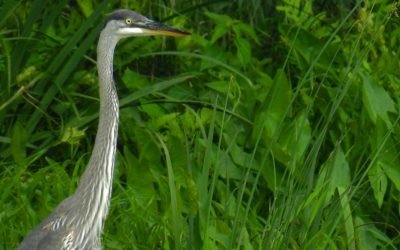
Great Blue Heron
Our largest North American heron, the Great Blue Heron (Ardea herodias), can reach a standing height of about four feet. Its impressive stature makes this species one of the birds most often noticed by the casual observer. Also contributing to its conspicuousness is...
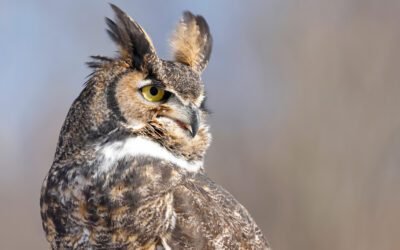
Great Horned Owl
The Great Horned Owl (Bubo virginianus) is one of our most widely distributed birds. Almost our entire area is potential Great Horned Owl habitat. These fierce, powerful predators range over large areas in search of prey, which can range in size from insects to skunks...
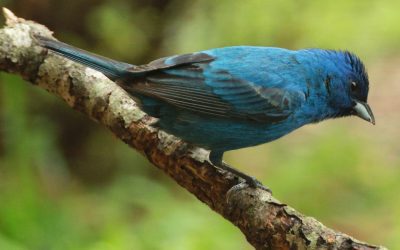
Indigo Bunting
The Indigo Bunting (Passerina cyanea) is a denizen of dense areas of deciduous shrubbery and young trees throughout the spring and summer. Though it is more common than many people realize, its populations are declining in eastern North America, as are the numbers of...
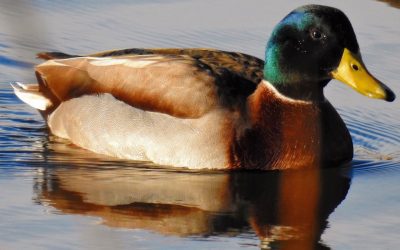
Mallard & Black Duck
The ubiquitous Mallard (Anas platyrhynchos) is a familiar sight to most of us. Though it prefers shallow ponds and marshes for its habitat, it can turn up on almost any unfrozen body of water in our area at any time of the year. The drake is easily identified as a...
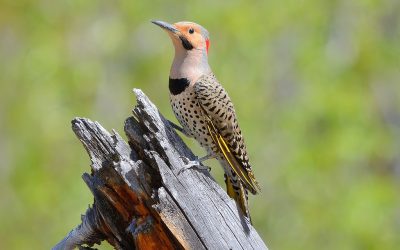
Northern Flicker
The Northern Flicker (Colaptes auratus), a large, colorful woodpecker, is a highly noticeable part of our avifauna. This is largely due to its frequenting open habitats, where its boldly patterned plumage and often-loud vocalizations draw human attention to it. While...
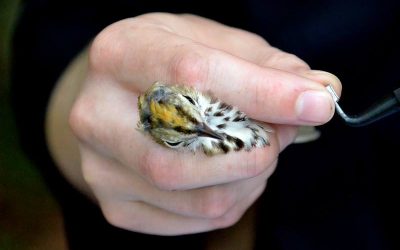
Ovenbird
There is a singer everyone has heard, Loud, a mid-summer and a mid-wood bird, Who makes the solid tree trunks sound again. Robert Frost, The Oven Bird The song of the Ovenbird (Seiurus aurocapilla) is one of the most familiar summer sounds of deciduous forest...