
About Fungi
Photo by Mason Rowe
Mason Rowe Talks Fungi…
In his role as our 2023 Summer Garden Intern, Mason was very busy. The garden redesign was in full swing when he arrived; he jumped right in to tasks involved in the garden, but was also able to share his passion for foraging for mushrooms in two pop-up fungi walks. Mason shares his expertise on fungi here, and for that we are grateful! Enjoy!
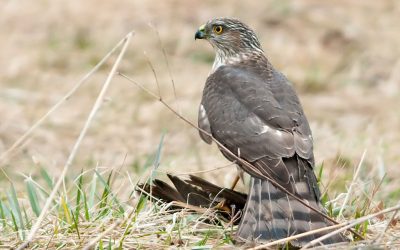
Accipiters
Each fall, ridgetops throughout the northeastern United States play host to flights of migrating hawks. The most spectacular of these in our area are the flocks of Broad-winged Hawks that pass through in mid-September. But providing the most consistent flight...

American Crow & Raven
The American Crow (Corvus brachyrhynchos) is familiar to everyone. One of the most common and visible birds in our area, this Crow is found in almost every habitat, including towns, forests, fields, and suburbia. A less familiar bird to many is the Common Raven...
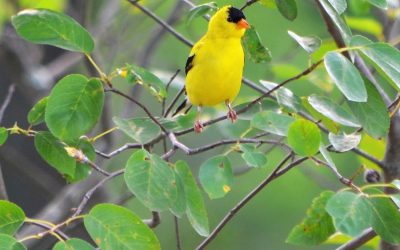
American Goldfinch
The American Goldfinch (Carduelis tristis) is one of our most familiar birds, especially to those who maintain bird feeders. This common inhabitant of shrubby fields, the edges of woods, and suburban areas is in spring through autumn, the male Goldfinch is a...
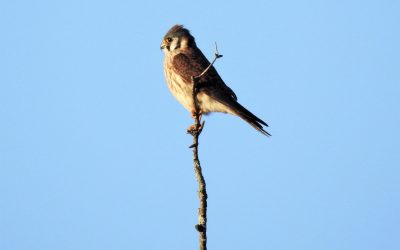
American Kestrel
One of the more common fall migrant raptors in eastern North America is the American Kestrel (Falco sparverius). This brightly-colored small falcon is now almost gone from Westchester and Putnam counties as a breeder, but continues to migrate through our area in good...
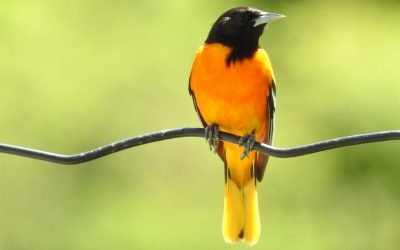
Baltimore & Orchard Oriole
One of the most notable avian events of May, a month with no shortage of such events, is the return of our two species of oriole from their Mexican and Central American wintering grounds. The arrival of such tropical-looking birds has always seemed to me an...
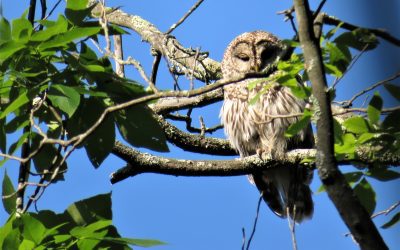
Barred Owl
The Barred Owl (Strix varia) is a common inhabitant of larger forest tracts and wooded wetlands in our area, though it, like many other nocturnal creatures, is seldom seen by humans. This species can be distinguished from our two other most commonly encountered...
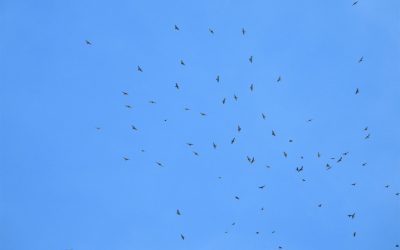
Broad-winged Hawk
The autumn Broad-winged Hawk (Buteo platyperus) migration is an awe-inspiring event. Each September, vast numbers of these birds make their way from their breeding grounds in the deciduous forests to our north to their wintering grounds in Central and South America....
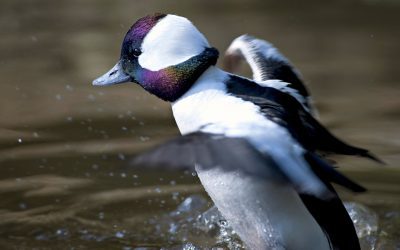
Bufflehead
The Bufflehead (Bucephala albeola), often known to hunters as the “butterball” for its ability to put on quantities of fat during fall migration, is a small, stubby, strikingly-plumaged duck common in our area in winter—as long as there is open water. The odd name is...
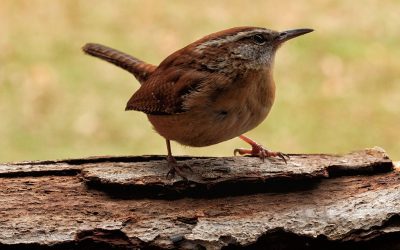
Carolina Wren
The Carolina Wren (Thryothorus ludovicianus) is an often-conspicuous presence, loudly announcing its presence to all within earshot with its loud, ringing song and a variety of distinctive call notes. At other times, this bird shows its retiring side, skulking in...
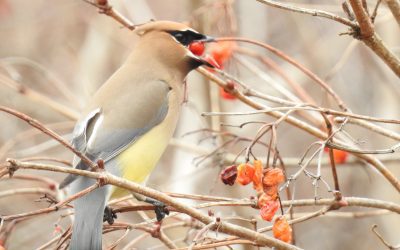
Cedar Waxwing
In a time when the populations of many songbird species in our part of the world are declining, one happy exception to this is the elegant Cedar Waxwing (Bombycilla cedrorum). One of a family consisting of only three species worldwide, our Waxwing is a common breeding...